


If you want to know how to write a consulting case study, start with four things a buyer can examine: the client’s situation, the decision the engagement supported, the evidence of what happened afterwards and the limits of what you can claim. A strong case study gives a prospective client enough context to judge whether your firm’s experience is relevant to their own problem.
For founders and marketing teams at consulting firms, that makes a case study a piece of sales evidence. It should help a buyer understand the assignment, your firm’s contribution and the work the client still had to do. Start with one decision and trace it through the engagement. A project summary becomes far more useful when the reader can see what changed and why it mattered.
Choose a project that answers a buyer’s question
Start with the question a prospect would ask about your experience. For example, a professional services founder comparing operational advisers might ask, “Can this team help us understand why approvals are slowing down work?” An engagement with a clear record of the approval process, the options considered and what happened after a change can answer that question.
Before you assign the draft, review three things:
- Relevance. What decision in the project resembles a decision your next buyer faces?
- Documentation. Which authorised records show the starting situation, the recommendation and the follow-up?
- Publication scope. Which details can the client or other authorised owner review for release?
Choose a story your records can support. A diagnostic engagement with a documented decision may make a credible case even if the client has yet to complete implementation. The title and summary should reflect the stage the work reached.
Gather consulting project evidence before you draft
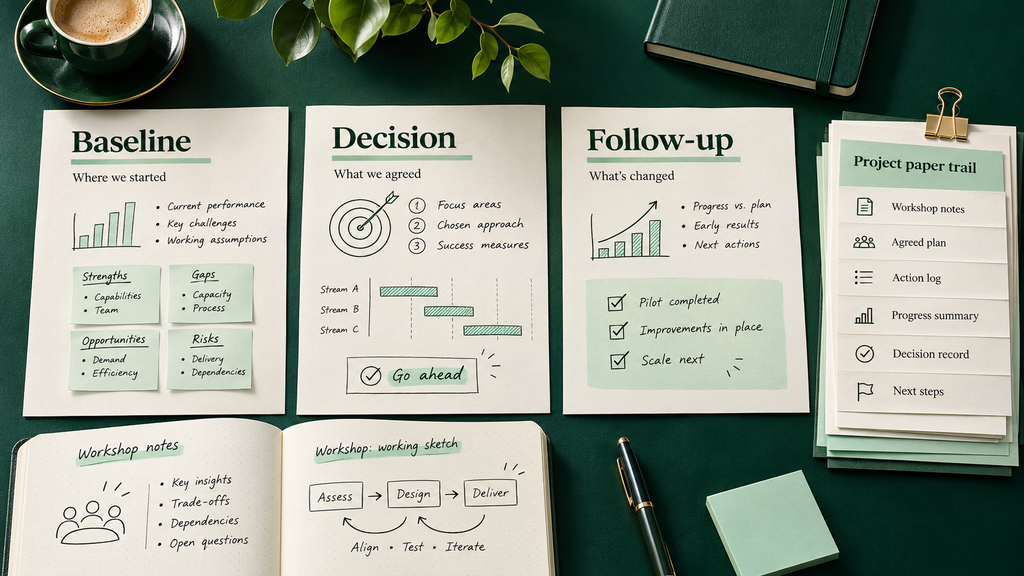
Ask the delivery lead to walk through the project in order. Open the original brief, the decision record and the latest follow-up while you talk. The engagement team may remember the result clearly and still struggle to recall which constraints shaped its recommendation at the time.
For each statement you want to publish, record the source, date or period, scope and person who can confirm it. If a claim is based on a calculation, keep the method beside the source. If it comes from a conversation, distinguish the speaker’s account from a finding drawn from project records.
| Part of the story | Evidence to look for | Question to settle before writing |
| Starting situation | Project brief, process records or agreed baseline | What did the client know when the engagement began? |
| Decision | Options paper, meeting record or approved recommendation | Who decided what to change, and what trade-off shaped the choice? |
| Implementation | Handover record, rollout log or client update | Which changes were implemented, when and by whom? |
| Outcome | Comparable reports, agreed metric or approved qualitative feedback | What changed, over what period and within what scope? |
| Limitations | Project closeout and measurement notes | Which factors or missing data affect interpretation? |
Your working file can contain more evidence than the published page. Keep restricted documents in the approved internal location and use the public article to disclose enough about the method and scope for buyers to assess the claim. If you cannot publish information essential to understanding a result, choose a narrower claim you can explain.
Write the story in the order buyers need it
Give the starting situation a boundary
Describe the client in terms the intended reader can use. “A multi-office professional services firm” tells the reader something about coordination. Add the relevant department or workflow and explain what the business needed to decide. Where confidentiality matters, use the degree of detail the client has agreed to release.
A useful opening also identifies the scope. A delay in one team’s approval queue is a different problem from a business-wide operating issue. Write down what the team observed and when it observed it. Leave space for the explanation that the engagement would later test.
Describe the decision and the trade-off

Show the options the client considered and why one was chosen. A buyer learns more about how you work from a specific trade-off than from a list of workshops. Explain what evidence changed the conversation, what risk the client accepted and who owned the decision. In a positioning strategy engagement, clarify which buyer segment the client chose to prioritise and why.
Then describe your firm’s contribution with verbs that match the work. Your team may have mapped a workflow, evaluated options or co-designed a pilot. The client may have approved the change, assigned staff and managed rollout. Buyers can use those details to understand the role they would retain in a similar engagement.
Report the outcome with its scope
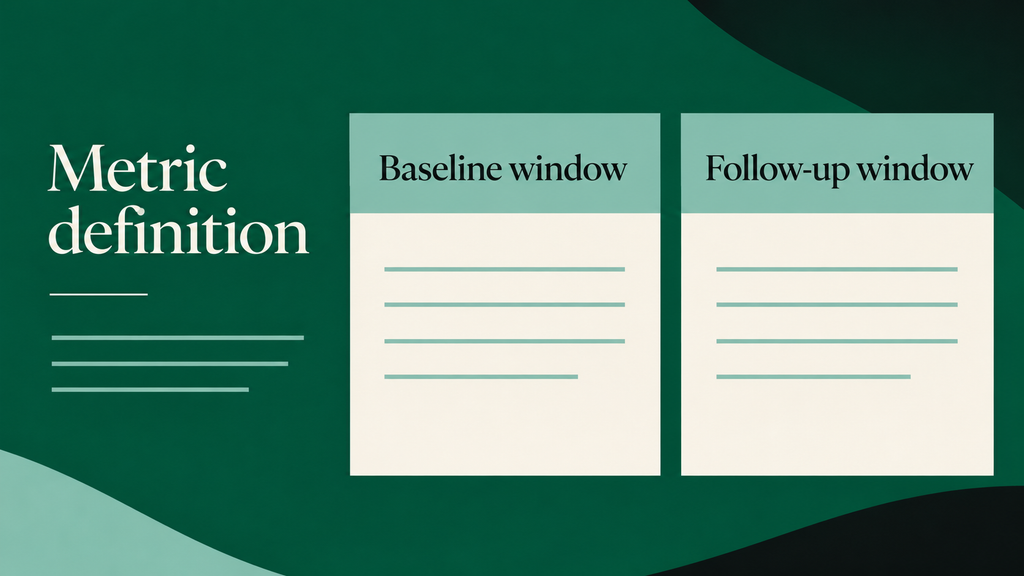
When you have numeric evidence, describe what the metric means, how it was measured and what periods you compared. A duration, rate or percentage is easier to interpret when the buyer knows which cases entered the calculation. If the client changed the reporting method during implementation, explain the effect or choose a comparable measure.
When the outcome is qualitative, be equally clear. An approved operating decision, a documented process change or agreement on a next investment can all be reported. Identify the record that supports the statement and the stage the client reached. If the effect of the decision is still being evaluated, say what has been observed so far.
Worked example of a fictional consulting case study
Illustrative example. This scenario, firm and set of figures are fictional. They show how a consultancy could structure a case using its own authorised evidence.
Context. A multi-office advisory firm was reviewing how nonstandard proposals received commercial approval. The operations lead wanted to find out whether the review process needed new software or clearer responsibilities. The engagement covered one service line and its standard UK workweek. Other proposal categories stayed outside the pilot.
Decision. The consulting team mapped the existing approval path and reviewed timestamped records. It identified several instances where a reviewer had been asked to confirm information already supplied by a colleague. The team presented two options: consolidate reviews under one named decision owner or procure a new tool for routing proposals. The client chose to test the ownership change using its existing workflow before considering the additional investment.
Evidence. In this illustration, the client defines approval time as business hours from receipt of a complete submission to recorded approval. The records contain 24 eligible proposals in the four weeks before the pilot and 26 during a four-week follow-up. The illustrative median moves from 18 to 12 business hours. The comparison uses the same inclusion rule in both periods.
Limitations. The pilot involved one service line and the windows were short. The proposal mix and staff availability could also have differed. The observed median was lower during the pilot, and the comparison alone cannot isolate how much of the change came from the new approval arrangements.
What happened next. The operations lead agreed to extend measurement before deciding whether to apply the workflow to other service lines. The takeaway for a prospective client is specific: if approvals are difficult to explain, record when a complete submission enters the queue and who owns each decision before deciding what technology to buy.
Reusable consulting case study template
Use these fields to brief a writer or review an existing draft. Each field should carry one piece of information a buyer needs to evaluate the project.
- Headline. Name the type of client and the business decision or documented change. Choose an outcome headline only when you have evidence to support it.
- Summary. Explain the client’s starting point, your contribution and the current status in two or three sentences.
- Context and scope. Specify the team, workflow and timeframe covered. State any constraints needed to understand the assignment.
- Options and decision. Explain what the client considered, which evidence informed the choice and which alternative remained open.
- Roles and implementation. Attribute the work to the consultant, client and other contributors as applicable. Record how far implementation progressed.
- Outcome evidence. Give the measure or approved qualitative finding, its source, comparison periods where relevant and limitations.
- Buyer takeaway. Offer one transferable question and a next step relevant to readers facing a similar decision.
For example, a statement such as “the new process saved time” leaves the reader with a claim they cannot interpret. A more useful summary would describe a shorter observed median in the pilot, identify which proposals qualified and link readers to the measurement explanation elsewhere in the case. A sales colleague can then share the article without having to supply the missing context on a call.
Write the headline after checking the claim
Draft the headline once the context, decision and evidence agree. A pilot involving one team can support a headline about testing a new process. A claim about a lasting business improvement would need follow-up that supports that scope. If the engagement ended at a recommendation, name what the client decided and what remained open.
Give the summary the same treatment. A buyer should be able to quote it in an internal message without losing an essential qualification. Put the most important qualifier in the same sentence as the outcome or immediately after it. Then read the headline and summary together to check that they describe the same project stage.
Review the evidence and permission before publishing
Read the draft once as a sceptical buyer. Could someone understand the metric? Could they tell which team made the decision? Does the headline imply that a short pilot produced a durable business result? Flag claims that the approved material cannot support and make them more precise.
Then review the case with the original project lead and an authorised representative for the client where applicable. Put the exact draft, proposed screenshots, exact quoted wording and intended channels in front of the reviewer. Confirm that approvals cover how the case will actually appear, including any excerpts for proposal decks or social posts. A broad agreement to discuss the work may leave important questions about individual assets unresolved.
Anonymous publication still requires judgment. A combination of industry, location, dates and project details can make an unnamed client recognisable. Review the details in combination, especially if a quote names a tool or references an event. If you remove details for confidentiality, check whether the remaining information still supports the claim a buyer will read.
Help buyers use the case in a decision
Place a concise client profile and the project scope near the top. Give the client’s decision its own heading. Put limitations close to the figures they qualify. If a buyer only reads the summary and outcome, those sections should still tell a fair version of the story. As part of your consulting website design, place each case study near the service page it supports.
A founder may share the case with a partner who was absent from the first sales call. Include enough context for that reader to understand the assignment without the presenter. Check that images and captions still make sense when viewed apart from the surrounding paragraph. Mark fictional examples and illustrative photography as such.
A useful next step follows from the case. An advisory firm that has just described how it assessed an approval workflow can invite a discussion about a similar bottleneck. Make the audience and purpose of the conversation clear, and connect the case to a relevant service.

Frequently asked questions
What if an engagement has no measurable result yet?
Write about the documented milestone the client reached. For example, explain how the engagement led to an agreed decision, validated requirement or approved pilot. Identify the evidence and explain what still needs to be measured.
Can a consulting firm publish an anonymous case study?
It can consider an anonymous version where the relevant permissions and agreements allow it. Check whether the details could still identify the client. Keep enough context for buyers to judge the relevance and scope of the work.
How much detail should a consulting case study provide?
Include the facts that change how a buyer interprets the decision or outcome. The metric definition, baseline period and roles are usually more useful than a complete chronology of meetings. Use a summary for readers who want the main facts quickly.
Should a case study include client quotes?
A quote can explain how the client understood a decision or why it mattered to them. Confirm the exact wording and permission for the intended use. Use separate evidence for any numeric claim or project outcome that the quote mentions.
What is the difference between a project summary and a case study?
A project summary describes the assignment and activities. A case study explains how the client approached a decision, what evidence supports the reported outcome and what a buyer can learn from the engagement.
Discuss how to present your firm’s project evidence
Bring one engagement you would like to explain, the buyer question it could answer and a short list of records that support the story. If permission is still being discussed, share a general description and identify which details would need review. That gives you a practical starting point for deciding what the public case can credibly say.
Explore Thought Leadership Content for support turning consultancy expertise into evidence-led content. Browse ICONCLY Business Case Studies for published examples of the firm’s work. To discuss how to present your own project evidence, contact ICONCLY Business.