



Strong thought leadership examples leave readers with a better question than the one they started with. A board member asks what the last recovery exercise revealed. A product leader looks at what happens to people when a system uses outdated information. A buyer asks who needs to approve a launch before committing to a date in the proposal.
Thought leadership is an informed point of view that helps an audience understand a problem or make a decision. Its value lies in the reasoning readers can follow. What did the expert notice? What did they check? What would they do differently as a result?
This guide is for founders, executives and subject-matter experts whose audiences may span several markets. Three published resources show how specialist ideas can travel. Two hypothetical business scenarios then show how experts can build arguments from their own work.
Three public examples with a decision attached
The NCSC gives boards a way to inspect recovery readiness
The UK National Cyber Security Centre’s Cyber Security Toolkit for Boards gives directors questions to ask about their organisation’s cyber resilience. Its guidance on testing and exercising recovery plans, written for critical infrastructure, explains why realistic exercises and partner involvement matter. It also calls for testing whether workarounds can sustain operations and identifying where they break down.
The useful distinction. A recovery plan describes what people intend to do. An exercise shows how teams, suppliers and workarounds perform under a defined set of conditions. A director can ask for evidence of both at their next review.
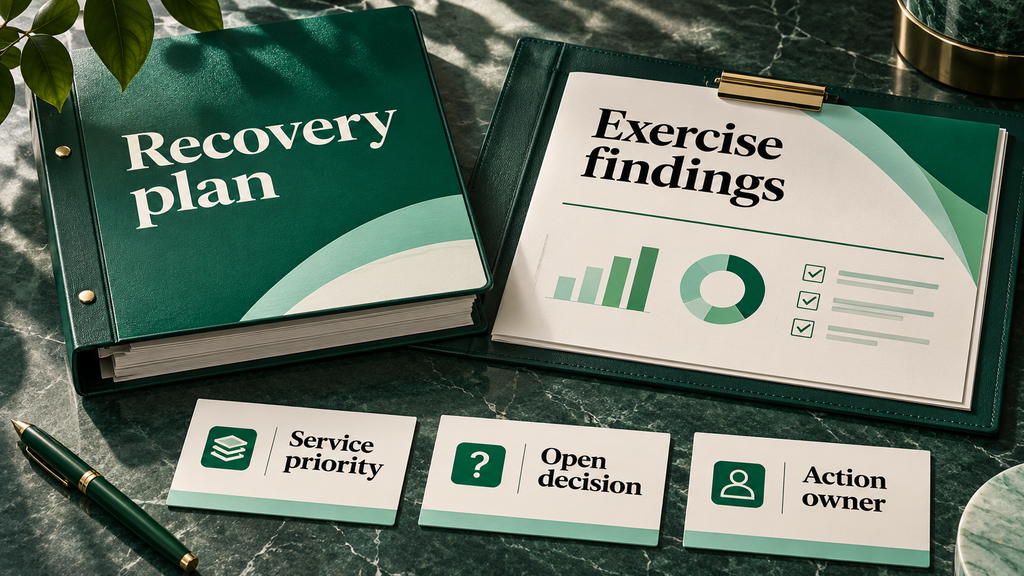
A buyer assessing a resilience adviser might ask, “What did the last exercise show about which service could resume first?” A credible answer describes what the team tested and identifies who owns the unresolved decisions. It also makes clear which services or conditions were outside the exercise. That gives the buyer a concrete way to assess the adviser’s judgment about readiness.
The GOV.UK Service Manual changes where the problem begins and ends
The GOV.UK guide to designing government services describes a good service from the perspective of the person using it. It looks at whether users can complete their task from start to finish, find help when they need it and navigate the process without having to understand the organisation behind it. Its accompanying guidance on applying the Service Standard discusses starting with a manageable scope, learning from users and iterating.
The manual changes where a service begins and ends. An organisation may track submission, review and activation in separate systems. The person using the service experiences them as one task. A completion measure that stops at submission can leave the team unaware of delays during review or activation.
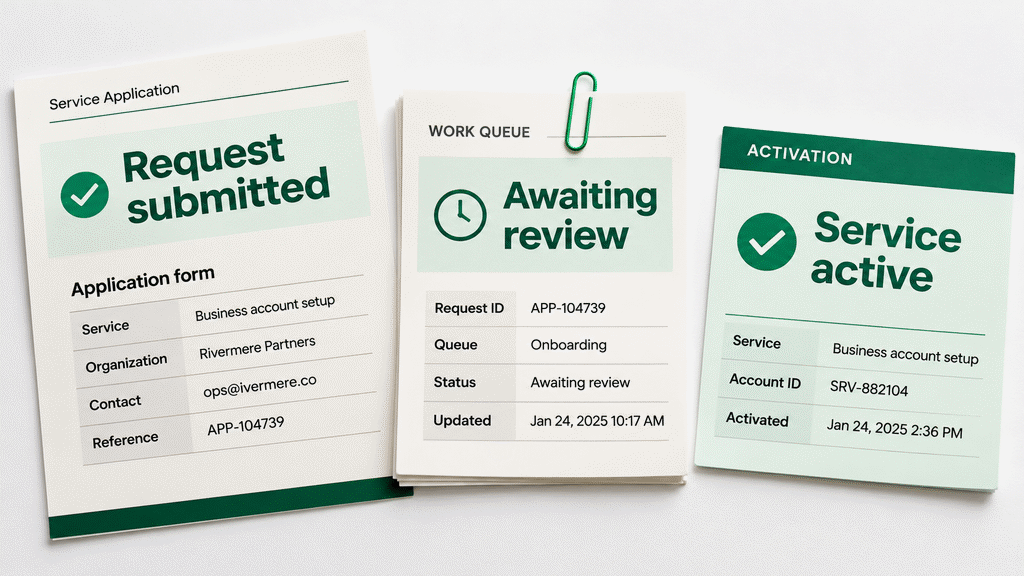
An executive can use that distinction when comparing service improvement proposals. Ask each bidder which outcome they would measure, when the measurement stops, and whose records they would use to account for the stages in between. The manual gives the buyer a frame for the inquiry. The organisation’s own records show where further investigation belongs.
NIST makes the consequences of data use visible
Strong thought leadership examples leave readers with a better question than the one they started with. A board member asks what the last recovery exercise revealed. A product leader looks at what happens to people when a system uses outdated information. A buyer asks who needs to approve a launch before committing to a date in the proposal.
Thought leadership is an informed point of view that helps an audience understand a problem or make a decision. Its value lies in the reasoning readers can follow. What did the expert notice? What did they check? What would they do differently as a result?
This guide is for founders, executives and subject-matter experts whose audiences may span several markets. Three published resources show how specialist ideas can travel. Two hypothetical business scenarios then show how experts can build arguments from their own work.
Three public examples with a decision attached
The NCSC gives boards a way to inspect recovery readiness
The UK National Cyber Security Centre’s Cyber Security Toolkit for Boards gives directors questions to ask about their organisation’s cyber resilience. Its guidance on testing and exercising recovery plans, written for critical infrastructure, explains why realistic exercises and partner involvement matter. It also calls for testing whether workarounds can sustain operations and identifying where they break down.
The useful distinction. A recovery plan describes what people intend to do. An exercise shows how teams, suppliers and workarounds perform under a defined set of conditions. A director can ask for evidence of both at their next review.
A buyer assessing a resilience adviser might ask, “What did the last exercise show about which service could resume first?” A credible answer describes what the team tested and identifies who owns the unresolved decisions. It also makes clear which services or conditions were outside the exercise. That gives the buyer a concrete way to assess the adviser’s judgment about readiness.
The GOV.UK Service Manual changes where the problem begins and ends
The GOV.UK guide to designing government services describes a good service from the perspective of the person using it. It looks at whether users can complete their task from start to finish, find help when they need it and navigate the process without having to understand the organisation behind it. Its accompanying guidance on applying the Service Standard discusses starting with a manageable scope, learning from users and iterating.
The manual changes where a service begins and ends. An organisation may track submission, review and activation in separate systems. The person using the service experiences them as one task. A completion measure that stops at submission can leave the team unaware of delays during review or activation.
An executive can use that distinction when comparing service improvement proposals. Ask each bidder which outcome they would measure, when the measurement stops, and whose records they would use to account for the stages in between. The manual gives the buyer a frame for the inquiry. The organisation’s own records show where further investigation belongs.
NIST makes the consequences of data use visible
The US National Institute of Standards and Technology’s Privacy Framework guidance starts from the problems individuals could experience when an organisation processes data. It considers the full lifecycle, from collection through disposal, and connects potential problems for people to risks the business can evaluate alongside its other priorities.
Imagine a new service that relies on existing account information. The product team needs to ask what happens if the information is outdated and someone receives the wrong decision. Operations can explain how that person would challenge the decision. Security specialists can assess who has access to the underlying data.
What to request. Ask for a walkthrough of one consequential decision, from the source of the information to how an affected person can correct it. Process records and design decisions can help the buyer evaluate how the organisation handles that risk. The public framework sets up the question. The organisation supplies the evidence.
How an operations leader changed her mind about a redesign
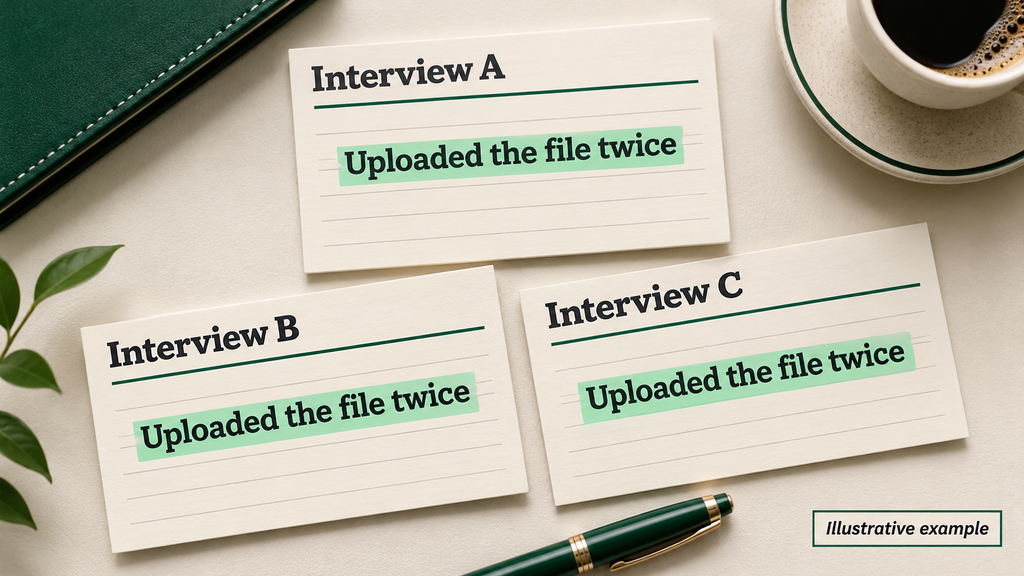
An operations director at a hypothetical business services firm is considering a portal redesign. Customers say they have to upload the same file twice. Her first explanation is that the upload screen is confusing. The draft proposal would replace it and add clearer instructions.
There is a decision to make before the budget meeting. Can the team explain where the duplicate request originates, and would replacing the screen change what happens there?
Follow the file before rebuilding the screen
- Start with a specific record. The customer’s original file reached the first team and passed its checks. The duplicate request came after the account moved to a new queue.
- Compare journeys. For each affected request, the director checks whether the receiving team could open the original file. She compares those requests against similar journeys that completed normally.
- Test another explanation. A second upload could be appropriate if a document expired or a reviewer needed different information. She checks whether either condition applied before attributing the duplicate request to the handoff.
In this scenario, the affected reviewers could see an application existed but could not access the original attachment. The director changes her recommendation. She asks the teams to test what can be passed to the second reviewer and define who owns that transfer before committing to a redesign.
The expert point of view. If people are asked for the same document twice, trace what the receiving team can actually see before changing the customer-facing screen. Procurement can ask vendors how they would test that hypothesis. The executive sponsor can use the answer to decide whether the proposed investment addresses the problem.
The 2025 Edelman–LinkedIn B2B Thought Leadership Impact Report examines buying-group participants whose influence may be less visible to a supplier. For anyone writing executive thought leadership, that makes the internal discussion worth considering. Give the reader a question they can take into their next meeting and enough reasoning to explain why it matters.
How to match the evidence to the claim
An observation can justify a question. A recurring pattern can justify investigating whether the same mechanism is at work. A causal claim needs evidence about how the outcome came about and what other factors might explain it.
Suppose a consultant observes that budget approvals arrive late in several projects. That alone gives them a reason to examine the sequence of reviews. To state that a shared approver caused delays, they would need records showing when reviews were requested, when earlier approvals were completed and what else affected the timetable. A project that used the same approver and finished on time may reveal a condition the argument needs to account for.
There is also a difference between evidence for a specific decision and evidence about a market. An approved project record can explain why a team changed course. An industry-wide claim requires data broad enough to support that scope. Readers should be able to tell which kind of claim they are being asked to evaluate.
Make the conditions clear across markets
The reasoning behind a recommendation can carry across borders when the conditions are clear. Approval authority, contractual terms and industry practice can vary between markets and organisations. Name the assumption that matters. For example, a scheduling argument may depend on local approval and central sign-off happening in a defined order. Readers can then check who actually holds those rights in their own organisation.
When adapting an idea for a new audience, ask which part of the evidence comes from the expert’s immediate context and which part a buyer can verify independently. That distinction is especially useful when publishing B2B thought leadership examples for international decision-makers.
A checklist for evaluating thought leadership
Use this checklist on a published article you admire or an idea your own team is considering. Read it once as a specialist and again as a buyer with a decision due.
- Decision. Can you name the decision the reader faces and the point at which they would use this idea?
- Point of view. Can you state the argument in one sentence and identify which assumption it puts under scrutiny?
- Reasoning. Does it explain how the issue arises and which other explanations a careful reader should consider?
- Evidence. Can you identify the source, the scope of the observation and the difference between what was seen and what was inferred?
- Limits. Does the piece identify a plausible situation where its conclusion would change?
- Buyer relevance. Can the reader take away a question to ask, evidence to request or a criterion for comparing options?
- Permission. Are the examples, descriptions and supporting materials cleared for public use, with sensitive details handled appropriately?
Ask a colleague outside the specialist team to read the piece as if they were considering a purchase. Can they say what they would do with the idea in their next meeting? If they can explain the conclusion but cannot name a way to check it, show them where the evidence came from. If they understand the evidence but have no idea what decision changes, revisit the buyer’s situation.
How a founder challenged a go-live date
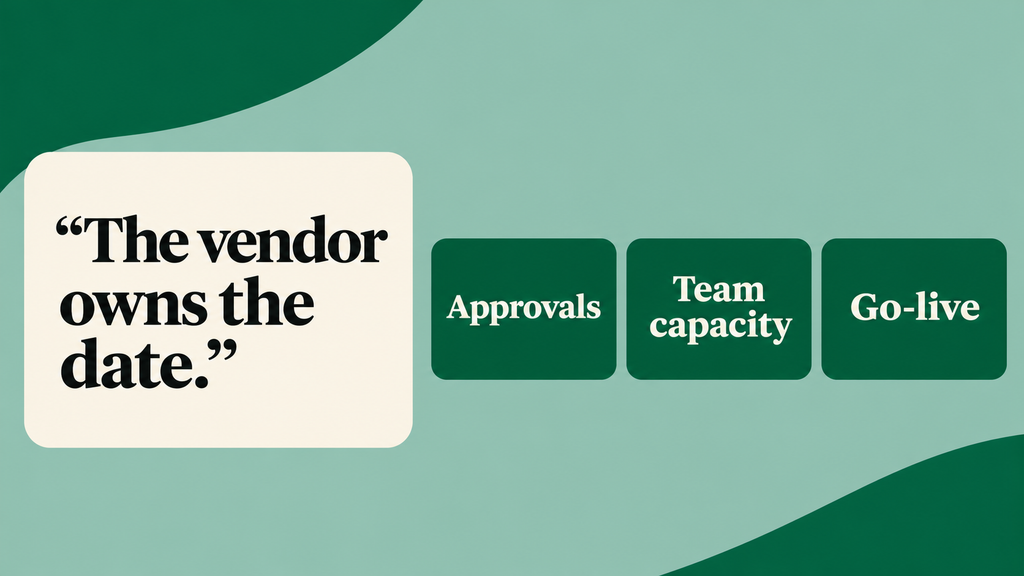
A founder at a hypothetical implementation firm is reviewing a rollout plan with a prospective client. The vendor can reserve a delivery team and has estimated the configuration work. The client asks for a go-live date based on that estimate. The founder spots a dependency the timeline has compressed into a single line called “client review.”
The client’s regional operations lead must approve the revised workflow before the central team can sign off. The same operations lead is also needed for the user acceptance sessions. Both reviews appear in the same week on the draft schedule, yet the second depends on the first and the approver has limited availability.
Check what the schedule assumes
- Identify who can approve each decision. A stakeholder who provides input may have different authority from the person who signs off on the workflow.
- Check where reviews can run in parallel. Independent approvals can sometimes proceed together. A review that needs the result of an earlier one belongs later in the sequence.
- Reserve the time the buyer needs. Ask whether the people who test or approve the work can be available when the schedule calls for them.
The founder suggests agreeing a provisional date and confirming it once the client has named its decision owners and reserved their time. If the client delegates both approvals to an available lead, the original sequence may be viable. The buyer now has a practical way to compare two proposals that promise the same launch date. Ask each vendor which commitments the date assumes and who must make them.
To find a publishable idea in your own work, start with a moment when your recommendation changed. Write down the assumption you began with and the evidence that made you update it. Then name the condition under which your original recommendation would still make sense. That condition gives readers a way to judge whether the idea applies to them.
Turn a private observation into a public argument
Founders rarely remember a decision in the order it happened. Once the outcome is known, the original uncertainty can seem trivial. Reconstruct the decision from the records available at the time. A meeting note, an early proposal or an approved project summary can help you see what the team knew before the outcome was obvious. Keep a record of the criteria that were available before approval.
- Write the original recommendation. Describe what you would have done with the information you had on the first day.
- Find the deciding evidence. Identify the observation that changed your view and the alternative explanation you ruled out.
- Name who can apply it. Specify a reader who faces a similar decision and give them one question they can ask before acting.
The finished argument should reveal enough of the process for a reader to evaluate it. Sensitive details can stay private when the remaining account still makes the reasoning clear. If removing those details also removes the basis for the claim, choose a different example or narrow what the piece argues.
Thought leadership is an evidence-backed point of view that helps readers understand a problem or make a decision. Three thought leadership examples show how this works in practice: the UK National Cyber Security Centre gives boards a way to assess recovery readiness, the GOV.UK Service Manual shows why teams should measure a service from request through completion, and NIST’s Privacy Framework helps organisations examine how their use of data affects people. Each example gives the reader a specific question to ask or a decision to reconsider.
Discuss the expertise your market should understand
If your team’s public content describes what you do but buyers still ask why your approach differs, look at one recurring buying decision. Prepare the question buyers ask, an example of the judgment your team brings, and any public or approved material that supports the distinction. One existing article or proposal excerpt can also help show where the reasoning becomes too broad or disappears. Share only material you are authorised to disclose.
Explore Thought Leadership Content to see how this challenge fits within ICONCLY Business’s work. If you want to discuss which ideas deserve a closer look, request a conversation with ICONCLY Business or email info@business.iconcly.com. Mention who needs to understand the idea and which decision it could improve.
If a formal Diagnostic Audit is relevant, confirm what questions it would examine, who should participate, the materials needed, and the scope, timing and terms before proceeding. The initial enquiry gives ICONCLY context to review and respond before any appointment is confirmed.
Frequently Asked Questions About Thought Leadership
What is an example of thought leadership in business?
An implementation founder could explain why a launch date depends on the buyer’s approval sequence as well as the vendor’s delivery schedule. By showing who needs to sign off and when, the founder gives buyers a way to test a proposed date before committing to it.
What makes thought leadership different from educational content?
Educational content explains a topic or process. Thought leadership adds an informed point of view about how to interpret an issue or approach a decision. A guide might explain what a recovery exercise is. A thought leadership piece could show which findings a board should examine before accepting that a service is ready to recover.
Can thought leadership be based on one project?
Yes, if the claim stays within what the project can support. One project can show how an expert reached a decision or reveal a question other teams should investigate. Claims about how common the same issue is across an industry need broader evidence.
How can executives choose a thought leadership topic?
Start with a decision your buyers repeatedly face. Look for a moment when evidence changed your recommendation, then ask whether you can explain that change using material you’re authorised to share. A strong topic gives buyers a question they can take into their next meeting.
How can a thought leadership idea work across different markets?
Explain which conditions make the idea applicable. For example, a recommendation about launch timing may depend on who can approve a change and whether approvals can run in parallel. Readers can then check those conditions against how their own organisations operate.
How can buyers tell whether a thought leadership example is credible?
Look for a clear claim, a source you can inspect, and an explanation of where the conclusion applies. A credible example shows what the expert observed, what they inferred from it, and what could change their conclusion.